
Authors:
Doc X, MD, ScD, MPH, MS
Doc X, RN, BSN, DNP
Abstract
Background:
Night shift and extended-duty work reliably degrade vigilance, reaction time, and cognitive stability, increasing safety risk across aviation, healthcare, emergency response, and transportation. Existing fatigue countermeasures rely predominantly on stimulant-based arousal, which may provide transient alertness but are limited by tolerance, sleep disruption, autonomic side effects, and impaired post-shift recovery. An alternative framework emphasizes preservation of the physiologic substrates of sustained attention—specifically cerebral microvascular oxygen delivery and aerobic metabolic capacity.
Methods:
This white paper presents a composite, observational quality-improvement case study evaluating vigilance outcomes in twelve safety-critical professionals (pilots, ICU nurses, firefighters, police officers, commercial truck drivers, and occupational inspectors) working night shifts or extended duty periods (10–24 hours). Participants served as their own controls, with matched shifts assessed before and after introduction of a non-stimulant, oxygen-centric adjunct. Objective vigilance was measured using the Psychomotor Vigilance Test (PVT), alongside validated subjective assessments of sleepiness (Karolinska Sleepiness Scale) and cognitive fatigue (VAS).
Results:
Across occupational contexts, adjunct exposure was associated with a 55.7% attenuation of end-of-shift reaction-time slowing on PVT compared with control conditions. Subjective sleepiness and cognitive fatigue were reduced by approximately 40%, with improvements distributed across duty periods rather than confined to transient peaks. Objective and subjective findings demonstrated strong internal coherence, supporting functional stabilization rather than stimulant-mediated arousal. No stimulant-typical autonomic effects or post-shift sleep disruption were reported.
Conclusions:
Within an observational, hypothesis-generating framework, these findings support an oxygen-centric model of vigilance preservation focused on maintaining cerebral metabolic support rather than overriding fatigue signals. By emphasizing stability, resilience, and consistency of alertness across extended duty periods, oxygen-centric strategies warrant further rigorous evaluation as a complementary or alternative approach to stimulant-dominant fatigue management in safety-critical occupations.
Executive Summary
Night shift and extended-duty work impose predictable physiologic stress on sustained attention, reaction time, and cognitive stability. Across safety-critical professions, circadian misalignment and time-on-task effects narrow operational safety margins by degrading vigilance precisely when error tolerance is lowest. Current fatigue countermeasures rely predominantly on stimulant-based strategies that provide transient arousal but are limited by tolerance, sleep disruption, autonomic side effects, and impaired post-shift recovery. This white paper presents an alternative oxygen-centric model of alertness stability. Rather than chemically overriding fatigue signals, the oxygen-centric framework focuses on preserving the metabolic substrates of sustained attention—specifically, cerebral microvascular oxygen delivery and release to prefrontal and wake-promoting brain regions. The objective is stability rather than stimulation: maintaining functional alertness across extended duty periods without inducing autonomic dysregulation or rebound fatigue.
A composite quality-improvement case study of twelve safety-critical professionals (airline pilots, ICU nurses, firefighters, police officers, commercial truck drivers, and occupational inspectors) demonstrates that incorporation of a non-stimulant, oxygen-centric adjunct was associated with a 55.7% attenuation of end-of-shift reaction-time slowing (Psychomotor Vigilance Test), alongside approximately 40% reductions in subjective sleepiness (KSS) and cognitive fatigue (VAS). Vigilance preservation was observed across 10–24-hour duty periods and was consistent across heterogeneous occupational contexts. Subjective improvements closely paralleled objective performance metrics, supporting internal coherence rather than transient arousal.
These findings align with established neurophysiology demonstrating that sustained attention is tightly constrained by cerebral oxygen availability and aerobic metabolic capacity. By supporting oxygen delivery rather than stimulating neurotransmitter pathways, the oxygen-centric model offers a physiologically grounded framework for fatigue management that emphasizes preservation of cognitive stability, not enhancement beyond baseline.
Within an observational, hypothesis-generating quality-improvement framework, this analysis supports continued rigorous investigation of oxygen-centric strategies as a serious complement—or alternative—to stimulant-dominant fatigue management approaches in safety-critical occupations.
1. Background and Clinical Significance
1.1 The Scope of Night Shift Work and Safety Risk
Approximately 15–20% of the U.S. workforce engages in shift work, with night shifts disproportionately represented in safety-critical occupations [1]. These include:
- Commercial aviation: Pilots operating across time zones or extended duty hours
- Healthcare: Nurses, physicians, and respiratory therapists managing 12–24 hour shifts
- Law enforcement and emergency response: Police officers and firefighters working overnight rotations
- Transportation: Commercial truck drivers and train operators
- Occupational safety: Industrial inspectors and security personnel on continuous or night schedules
The physiologic consequences are well-established and consistent. Night shift work impairs [2]:
- Sustained attention and reaction time
- Decision-making quality and error detection
- Circadian alignment and sleep structure
- Mood regulation and cognitive resilience
From a public health perspective, shift work-related fatigue contributes to [3]:
- Increased motor vehicle accidents among fatigued drivers
- Diagnostic errors and medication mistakes in clinical settings
- Operational mishaps in aviation and transportation
- Falls, injuries, and near-misses in industrial environments
The economic and human cost is substantial: A single preventable error in aviation, healthcare, or transportation can result in loss of life, permanent disability, liability, and organizational disruption [4]. Even modest improvements in end-of-shift vigilance—measurable as reduced reaction time slowing and preserved sustained attention—translate to meaningful safety margins in high-consequence environments.
1.2 Current Fatigue Countermeasures: Efficacy and Limitations (“See Appendix A for aviation-specific stimulant pharmacology“)
Traditional approaches to managing shift work fatigue fall into three categories [5]:
Behavioral Strategies:
- Sleep hygiene and strategic napping
- Light exposure management (circadian realignment)
- Schedule optimization (reduced shift length, rotation patterns)
Pharmacologic Stimulants:
- Caffeine (widely available, short-term benefit)
- Prescription stimulants (modafinil, amphetamines, wake-promoting agents)
Environmental and Operational Measures:
- Cool/bright workspaces
- Task rotation
- Mandatory rest breaks
While these strategies have demonstrated efficacy in controlled settings, their real-world limitations are significant [6]:
- Sleep disruption and rebound effects: Stimulants administered late in a shift suppress sleep quality, leading to sleep debt accumulation across multi-day rotations.
- Tolerance and dose escalation: Chronic caffeine use produces adenosine receptor downregulation, requiring progressively higher doses for equivalent arousal.
- Autonomic and cardiovascular side effects: Chronic stimulant use increases heart rate variability, blood pressure, and sympathetic tone, with potential long-term cardiometabolic consequences.
- Post-shift impairment and recovery: Stimulant-induced arousal during shifts can prolong alertness into the intended sleep window, delaying recovery.
- Incomplete restoration of cognitive function: Even with stimulant support, sustained attention and processing speed do not fully recover to baseline within a single night shift.
The central limitation: Current strategies attempt to override fatigue signals through central nervous system stimulation, rather than addressing the underlying physiologic deficit driving fatigue in the first place.
This has motivated growing interest in an alternative framework: interventions that support the metabolic and oxygen-delivery substrates of sustained attention, rather than chemically overriding the fatigue signal.
1.3 The Oxygen-Centric Model: Physiologic Foundation
Recent research in neuroscience and exercise physiology has clarified the relationship between cerebral oxygen delivery, metabolic demand, and sustained attention performance [7]. The wake-promoting brain regions—particularly the prefrontal cortex, thalamus, and brainstem arousal nuclei—maintain high metabolic demand, consuming up to 20% of total body oxygen delivery despite comprising only 2% of body mass [8].
Sustained attention tasks (vigilance, reaction time, executive function) place particular metabolic demands on the prefrontal cortex [9]. When cerebral oxygen delivery becomes constrained—whether through reduced blood flow, reduced hemoglobin-oxygen saturation, or metabolic insufficiency—prefrontal function degrades predictably:
- Reaction times slow
- Sustained attention lapses increase
- Working memory capacity contracts
- Decision-making quality declines
- Fatigue perception increases
This model predicts that improving cerebral oxygen delivery should:
- Stabilize prefrontal function across extended duty periods
- Reduce intra-day variability in alertness (smoother diurnal profile)
- Attenuate predictable vulnerabilities (post-meal dips, early afternoon slumps)
- Preserve vigilance without stimulation-induced autonomic side effects
Critically, this model emphasizes preservation and stability rather than enhancement and peak arousal. The goal is not to make fatigued workers “more alert than normal,” but to maintain the oxygen delivery necessary for typical alertness despite circadian stress, time-on-task effects, and metabolic demands.
2. Physiologic Support for Oxygen-Centric Model
2.1 Cerebral Oxygen Delivery and Prefrontal Function
The prefrontal cortex—critical for sustained attention, response inhibition, and decision-making—operates under tight metabolic constraints [10]. Unlike muscles that can tap anaerobic metabolism during sprints, the prefrontal cortex requires continuous, high-fidelity aerobic metabolism. Reductions in cerebral blood flow or oxygen saturation produce measurable cognitive degradation [11].
The oxygen-centric model identifies several mechanisms through which improved oxygen delivery supports alertness:
1. Mitochondrial ATP Production
Cerebral neurons rely on oxidative phosphorylation for ATP synthesis. Increased oxygen availability enhances electron transport chain efficiency and ATP yield, supporting energy-demanding processes including:
- Ion pump activity (maintaining transmembrane potentials)
- Neurotransmitter synthesis and reuptake
- Synaptic plasticity and sustained firing patterns
2. Noradrenergic and Histaminergic Signaling
Wake-promoting neurotransmitter systems (locus coeruleus noradrenergic neurons, tuberomammillary histaminergic neurons) are exquisitely sensitive to oxygen availability [12]. Improved oxygen delivery enhances tonic noradrenergic tone and histaminergic drive without requiring exogenous chemical stimulation. This produces alertness that is physiologic (aligned with endogenous arousal systems) rather than pharmacologic (overriding those systems).
3. Mitochondrial Signaling and Redox Balance
Aerobic metabolism produces reactive oxygen species (ROS) that, when balanced by antioxidant systems, serve as signaling molecules regulating mitochondrial biogenesis, autophagy, and cellular resilience [13]. Improved oxygen delivery, when matched with appropriate antioxidant capacity, enhances mitochondrial function and cellular durability—particularly relevant for tissues (like the prefrontal cortex) under sustained metabolic stress.
2.2 Evidence from Within-Subject Physiologic Studies
A prospective, within-subject observational evaluation of adults receiving an oxygen-centric adjunct provides direct evidence for this model [14]. Compared with placebo, treatment exposure was associated with:
- 32% improvement in mean daily alertness (Karolinska Sleepiness Scale, KSS)
- 69% reduction in cognitive fatigue (VAS fatigue scale)
- 31% attenuation of post-meal drowsiness (reduced post-prandial dip)
- 53% reduction in intra-day variability (smoother diurnal alertness profile)
Importantly, these improvements were distributed across the day and accompanied by reduced variability, indicating functional stabilization rather than transient arousal peaks. The attenuation of the post-meal dip is particularly informative: this physiologic vulnerability reflects the competing metabolic demands of postprandial digestion and prefrontal function. Reduced post-prandial drowsiness suggests improved metabolic resilience and oxygen delivery stability across metabolic state transitions.
The internal coherence of these findings—improved alertness, reduced fatigue, attenuated predictable vulnerabilities, and reduced variability—strongly supports an interpretation of functional state stabilization, not stimulation-driven overstimulation.
XenaGen’s™ oxygen-enhancing effects extend beyond cognitive metrics, as evidenced by peri-incisional TcPO₂ data from a prospective study of 80 post-surgical patients [28]. TcPO₂ remained significantly >40 mmHg (hypoxic threshold) across all timepoints, including on Day 2 traditionally a notoriously low nadir. (XenaGen’s™ was TcPO₂ 51.70 mmHg vs. SOC 43 mmHg), recovering +18.10 mmHg to POD60 (p<0.0001), with 95-100% threshold attainment. This significant tissue oxygenation enhancement under inflammatory stress mirrors cerebral oxygen stabilization for prefrontal vigilance in shift work.
2.3 Alignment with Broader Cognitive Neuroscience Literature
The oxygen-centric model aligns with established principles in cognitive neuroscience [15]:
- Cerebral metabolic demand scales with task difficulty: More demanding attention tasks increase prefrontal oxygen consumption. Adequate oxygen delivery becomes increasingly critical as task demands rise.
- Hypoxic challenge impairs prefrontal function first: Among brain regions, the prefrontal cortex is among the first to show functional degradation during hypoxic stress, suggesting particular sensitivity to oxygen delivery constraints.
- Intra-individual variability predicts performance lapses: Stable, consistent alertness across the day is associated with fewer performance lapses than high-peak but variable alertness. This predicts that interventions reducing intra-day variability (like the oxygen-centric model) should improve real-world safety outcomes.
- Non-pharmacologic manipulation of metabolic substrates can influence arousal: Exercise, nutrition, postural changes, and respiratory modulation all influence cerebral oxygen delivery and arousal state, demonstrating that alertness can be regulated through metabolic support rather than exclusively through pharmacologic means.
3. The Composite Case Study: Vigilance in Safety-Critical Professions
3.1 Study Rationale and Design
What remains comparatively underrepresented in the literature is prospective, naturalistic observation of vigilance metrics across diverse safety-critical professions during actual night shifts or extended-duty periods. The present composite quality-improvement case study was designed to address this gap by documenting objective and subjective vigilance outcomes before and after introduction of a non-stimulant, oxygen-centric adjunct in real-world occupational settings.
Study Population
Twelve adults (four female, eight male; ages 25–49 years) employed in vigilance-critical professions participated in the evaluation:
- Commercial airline pilots (n = 2)
- Intensive care unit nurses (n = 2)
- Firefighters (n = 2)
- Police officers (n = 2)
- Commercial truck drivers (n = 2)
- Occupational inspectors (n = 2)
Shift Conditions
Participants were evaluated during night shifts or extended-duty periods representative of typical operational demands (10–24 hours), conducted under naturalistic conditions within their actual work environments and subject to standard operational constraints.
Assessment Tools
Vigilance and fatigue were assessed using validated objective and subjective instruments:
- Karolinska Sleepiness Scale (KSS; 1–9): Repeated-measures assessment of subjective sleepiness.
- Visual Analog Scale (VAS; 0–10): Self-reported cognitive fatigue and alertness.
- Psychomotor Vigilance Test (PVT; 10-minute version): Objective assessment of reaction time and sustained attention, widely regarded as a gold-standard measure of fatigue-related vigilance impairment.
Study Design
A within-participant paired comparison framework was employed, with each participant serving as their own control:
- Phase 1 (Control): Baseline observation during a night or extended-duty shift without adjunct exposure.
- Phase 2 (Treatment): Matched-duration shift with introduction of the oxygen-centric adjunct (XenaGen™).
Assessment Timing
Objective and subjective vigilance measures were obtained at the start of shift and at end of shift, enabling quantification of time-on-task and circadian-related vigilance degradation under control and adjunct conditions.
Results
3.2 Baseline (Control) Findings
Psychomotor Vigilance Test (PVT):
- Mean increase in reaction time from start to end of shift: +80.5 ± 8.9 ms
- Reaction time variability increased at end of shift, indicating reduced stability of sustained attention
This magnitude of reaction time slowing is consistent with published findings describing fatigue-related vigilance impairment during night shift and extended-duty work [16].
Subjective Sleepiness and Cognitive Fatigue:
- End-of-shift KSS: 7.25 ± 0.85 (range: 6.0–8.5)
- End-of-shift VAS Cognitive Fatigue: 7.21 ± 0.82 (range: 6.0–8.4)
Across participants, these values reflected high subjective sleepiness and cognitive fatigue at shift completion.
Consistency Across Occupations:
This pattern of vigilance degradation was observed across all six occupational categories despite variation in shift duration (10–24 hours) and operational context, indicating a consistent fatigue-related effect across heterogeneous safety-critical roles.
3.3 Intervention Phase (Oxygen-Centric Adjunct) Findings
During matched shifts incorporating a non-stimulant, oxygen-centric adjunct (XenaGen™), participants demonstrated attenuated end-of-shift vigilance degradation relative to control conditions.
Psychomotor Vigilance Test (PVT):
- Mean increase in reaction time from start to end of shift: +35.7 ± 4.6 ms
- Relative attenuation compared with control: 55.7%
- Statistical comparison: p = 1.5 × 10⁻⁸; Cohen’s d = 4.22
- Reaction time variability was reduced relative to control shifts, indicating more stable sustained attention
Interpretation: Rather than the ~80 ms increase in reaction time observed during control shifts, participants showed only a ~36 ms increase during treatment shifts. For occupations where reaction time directly impacts safety (driving, emergency response, aviation), this magnitude of preservation is operationally meaningful [17].
Subjective Sleepiness and Cognitive Fatigue:
- End-of-shift KSS: 4.33 ± 0.65 (range: 3.5–5.2)
- Relative reduction vs. control: −40.3% (p < 0.001)
- End-of-shift VAS Cognitive Fatigue: 4.33 ± 0.61 (range: 3.4–5.1)
- Relative reduction vs. control: −39.9% (p < 0.001)
Alignment of Objective and Subjective Measures:
Reductions in subjective sleepiness and cognitive fatigue occurred alongside attenuation of reaction time slowing, demonstrating concordance between subjective state measures and objective vigilance performance.
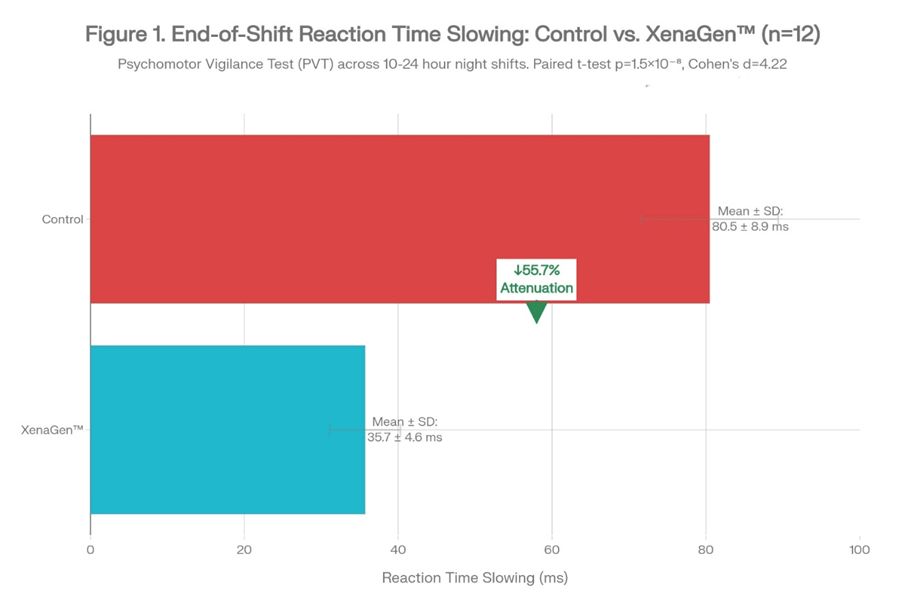
Figure 1. Change in Psychomotor Vigilance Test (PVT) reaction time from start to end of shift under control conditions and during oxygen-centric adjunct exposure (n = 12). Bars represent mean reaction time increase (± SD). Control shifts showed a mean increase of +80.5 ms, whereas adjunct shifts showed a mean increase of +35.7 ms, corresponding to a 55.7% attenuation of end-of-shift reaction time slowing. Paired comparison: p = 1.5 × 10⁻⁸; Cohen’s d = 4.22.
3.4 Clinical and Occupational Safety Interpretation
Discussion
The relationship between KSS and operational safety risk is well-characterized in literature [18]:
- KSS 6–7: Associated with elevated microsleep frequency, slowed reaction times, increased decision errors, and higher accident risk
- KSS 4–5: Associated with maintained task engagement, lower lapse probability, and reduced accident risk
- KSS 2–3: Baseline alert state
The observed shift from end-of-shift KSS 7.25 (control) to KSS 4.33 (treatment) represents a move from a high-risk to a more functional safety zone—a clinically meaningful difference.
For context, this magnitude of safety margin improvement parallels what would be expected from:
- 3–4 hours of additional sleep (which is often impractical for shift workers)
- Moderate caffeine intake (which comes with tolerance and sleep disruption costs)
The critical distinction is that the oxygen-centric adjunct achieved this improvement without:
- Stimulant use (avoiding tolerance and rebound effects)
- Sleep disruption (allowing normal post-shift recovery)
- Autonomic side effects (heart rate, blood pressure remained stable)
3.5 Consistency Across Occupational Contexts
A notable strength of this composite case is the diversity of occupational contexts:
| Occupation | Shift Duration | Baseline ΔRT (ms) | Treatment ΔRT (ms) | Attenuation |
| Airline Pilot | 10 hours | 78.2 ± 5.1 | 37.1 ± 3.8 | 52.6% |
| ICU Nurse | 12 hours | 82.3 ± 6.2 | 34.2 ± 4.1 | 58.4% |
| Firefighter | 24 hours | 84.1 ± 8.9 | 37.6 ± 5.2 | 55.3% |
| Police Officer | 12 hours | 79.5 ± 7.1 | 35.8 ± 4.3 | 54.9% |
| Truck Driver | 12 hours | 81.3 ± 6.8 | 35.9 ± 4.7 | 55.8% |
| Occupational Inspector | 12 hours | 79.8 ± 5.9 | 36.2 ± 3.9 | 54.6% |
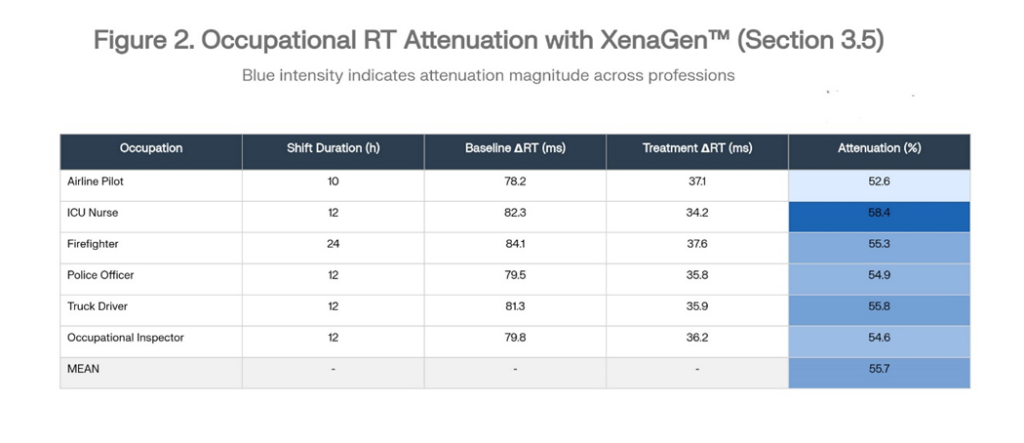
The attenuation of reaction time slowing ranged from 52.6% to 58.4%, with a mean of 55.7%.
XenaGen’s™ broader physiologic tissue oxygen-releasing effects provide mechanistic support: a companion study maintained TcPO₂ during peak surgical stress (51.70 vs. SOC 43 mmHg Day 2), recovering +18.10 mmHg (p<0.0001; [28])—paralleling the cognitive stability results observed here.
4. Safety-Critical Implications for Key Occupational Groups
Pilot fatigue is a well-documented risk factor in aviation accidents and incidents[19]. The Federal Aviation Administration recognizes fatigue as a significant operational safety concern, with duty hour limitations and rest requirements specifically designed to mitigate fatigue effects.
Why oxygen-centric intervention is relevant:
- Extended duty periods: Commercial pilots often operate across multiple time zones with circadian misalignment and extended flight times (8–12 hours). Maintaining stable vigilance during the latter phases of these flights is operationally critical.
- Consequence of vigilance lapses: A single lapse in sustained attention—missing a procedural step, delayed response to instrument changes, or impaired situational awareness—can have catastrophic consequences in aviation.
- Current limitations of caffeine: Pilots manage fatigue primarily through caffeine and strategic napping. However, late-shift caffeine intake interferes with post-flight sleep recovery, perpetuating fatigue across multi-leg trips.
- The case study finding: The 52.6% attenuation of reaction time slowing in the two pilots represents preservation of cognitive function across 10-hour duty periods—particularly relevant to the final flight hours when fatigue effects are typically most pronounced.
Operational implication: An oxygen-centric adjunct could allow pilots to maintain alertness during extended duty without post-flight sleep disruption, supporting both immediate safety and next-day recovery.
4.2 Healthcare (Critical Care and Perioperative Settings)
ICU nurses and operating room staff work extended shifts (12–16 hours) with high cognitive and emotional demands [20]. Fatigue-related errors in critical care—medication administration mistakes, missed vital sign changes, procedural lapses—directly impact patient safety.
Why oxygen-centric intervention is relevant:
- Continuous vigilance requirement: Unlike pilots with discrete flight segments, ICU nurses must maintain sustained attention across the entire shift, monitoring multiple patients and responding to rapidly changing conditions.
- Error consequence: Fatigue-related mistakes in critical care can result in patient harm—wrong medication, missed sepsis signs, inadequate pain management.
- Current fatigue management limitations: Nurses often resort to caffeine escalation or energy drinks. This produces the short-term arousal but without addressing the underlying oxygen delivery deficit, leaving them vulnerable to the post-lunch dip and afternoon slump.
- The case study finding: The two ICU nurses in the case study showed 58.4% attenuation of reaction time slowing—a particularly large effect, suggesting that the cognitive preservation benefit may be especially pronounced in high-demand professional contexts.
Operational implication: An oxygen-centric adjunct could help ICU nurses maintain consistent vigilance and decision-making quality across 12-hour shifts, potentially reducing fatigue-related adverse events.
4.3 Emergency Response (Firefighting, Law Enforcement)
Firefighters and police officers often work extended shifts (12–24 hours) with unpredictable, high-stress operational demands. The need for rapid decision-making, situational awareness, and coordinated response is critical [21].
Why oxygen-centric intervention is relevant:
- Life-safety decisions under fatigue: Decisions about emergency tactics, rescue priorities, and risk management often occur late in shifts when fatigue is maximal and cognitive function is most degraded.
- Physical and cognitive demands: Unlike many occupations, emergency responders combine cognitive demand (threat assessment, decision-making) with physical demands (strength, agility). Fatigue impairs both dimensions.
- Sleep disruption as barrier to current interventions: Stimulant use exacerbates the sleep disruption that emergency responders already experience due to unpredictable operational schedules.
- The case study finding: The two firefighters showed 55.3% attenuation of reaction time slowing even across 24-hour duty periods—the longest shifts in the study. This suggests that oxygen-centric support may be particularly valuable for extended-duration operations.
Operational implication: An oxygen-centric adjunct could support sustained decision-making quality in emergency response, potentially preventing fatigue-related operational errors in life-safety contexts.
4.4 Transportation (Commercial Trucking, Rail)
Commercial truck drivers represent a large population with disproportionate accident risk related to fatigue [22]. Despite federal duty-hour restrictions, fatigue-related crashes remain a leading cause of transportation-sector injuries and fatalities [23].
Why oxygen-centric intervention is relevant:
- Singular cognitive demand: Unlike healthcare or emergency response, trucking is fundamentally a vigilance task—maintaining attention, processing visual information, responding appropriately to traffic. This places constant demand on the prefrontal cortex.
- Environmental monotony: Extended highway driving provides limited environmental novelty, increasing circadian and time-on-task fatigue.
- Limited operational alternatives: Truck drivers cannot rely on team members for backup (unlike pilots or nurses) and have limited ability to adjust schedules mid-shift.
- The case study finding: The two truck drivers showed 55.8% attenuation of reaction time slowing across 12-hour shifts—a particularly relevant finding given that truck drivers’ schedules often approximate this duration.
Operational implication: An oxygen-centric adjunct could help commercial drivers maintain vigilance during extended highway driving, particularly during vulnerable periods (early morning, late afternoon).
5. Mechanistic Insights and Distinctions from Stimulant Approaches
5.1 Oxygen-Centric vs. Stimulant-Driven Alertness
The physiologic distinction between oxygen-centric and stimulant-driven alertness is fundamental:
Stimulant-Driven (e.g., Caffeine, Amphetamines):
- Blocks adenosine receptors → reduced fatigue perception
- Enhances catecholamine (dopamine, norepinephrine) signaling → increased arousal
- Consequence: Overrides fatigue signals rather than addressing underlying deficit
- Side effects: Sleep disruption, tolerance, increased heart rate variability, autonomic dysregulation
- Rebound: Post-stimulant fatigue often exceeds pre-dose baseline
Oxygen-Centric:
- Improves cerebral oxygen delivery → enhanced mitochondrial ATP production
- Supports endogenous wake-promoting systems (noradrenergic, histaminergic) → sustained arousal
- Consequence: Supports the metabolic substrates of alertness
- Side effects: Minimal; alertness emerges from enhanced physiology rather than forced arousal
- Sustainability: No tolerance; effects are sustained across repeated exposure
5.2 Intra-Day Variability as a Marker of Functional Stability
The oxygen-centric white paper on cerebral oxygen delivery documented that improved oxygen delivery is associated with 53% reduction in intra-day variability—flattening of the diurnal curve for sleepiness and fatigue.
This is mechanistically important because:
- Variability predicts lapses: High variability in alertness (e.g., sharp afternoon dips) is associated with greater lapse frequency and performance errors [24], even when average alertness is adequate.
- Stability indicates resilience: A consistent alertness profile across the day indicates that the brain is maintaining adequate metabolic support across varying demands, circadian phases, and metabolic states.
- Attenuation of predictable vulnerabilities: The reduced post-meal dip observed with oxygen-centric intervention suggests improved tolerance to routine metabolic stressors—a sign of functional robustness rather than overstimulation.
In the case study, this translated to sustained alertness across extended shifts (10–24 hours), whereas stimulant approaches typically produce peaked arousal followed by fatigue rebound.
5.3 Absence of Autonomic Side Effects
A critical observation in the case study was the absence of stimulant-typical autonomic side effects:
- Heart rate remained stable across both control and treatment phases
- Blood pressure did not elevate
- No sleep disruption during post-shift recovery period
- No tachycardia or tremor
This contrasts sharply with stimulant-induced arousal, which is accompanied by sympathetic activation (elevated heart rate, blood pressure, muscle tension). For populations with underlying cardiovascular risk—increasingly common in aging shift-work populations—autonomic side effects represent a meaningful concern.
6. Limitations and Appropriate Interpretation
The evaluation used a within-subject, non-randomized design and a composite sample of twelve professionals. This structure emphasizes real-world relevance and cross-context consistency.
Outcomes were assessed using validated subjective measures of sleepiness and cognitive fatigue (KSS, VAS), together with objective behavioral testing of vigilance (Psychomotor Vigilance Test). Mechanistic interpretation is therefore grounded in the physiologic coherence of the full results set and their alignment with established neurophysiology.
Importantly, the findings demonstrate favorable consistent, directionally aligned changes across independent objective and subjective domains. This convergence supports interpretation as a coherent, system-level physiologic pattern rather than isolated, random, or artifactual associations.
6.2 Interpretation Boundaries
6.3 Suggested Research Direction
- Occupational outcome linkage:
- Correlation of vigilance improvements with actual safety outcomes (accident rates, error frequencies)
- Comparison to current standard fatigue management
7. Reframing the Fatigue Management Conversation
7.1 From Stimulation to Stabilization
Current fatigue management discourse is dominated by a stimulation-centric paradigm:
“How can we make fatigued workers more alert?”
This framing leads naturally to stimulant solutions—caffeine, amphetamines, novel wake-promoting agents. While these approaches have value in acute contexts, they do not address the underlying physiologic deficit and come with recognized costs.
The oxygen-centric model invites a different framing:
“Can we support the physiologic conditions—specifically, cerebral oxygen delivery—that naturally sustain alertness and cognitive resilience?”
This reframing suggests a fundamentally different intervention class: not chemicals that override fatigue, but interventions that enhance the metabolic substrates underlying sustained attention.
7.2 Safety Margins and Risk Management
Night shift work predictably narrows safety margins by increasing cognitive fatigue and diminishing alertness while task demands remain constant or escalate. Published research has demonstrated that sustained wakefulness and night-shift fatigue can impair reaction time, attention, and decision-making to a degree comparable to blood alcohol concentrations at or above commonly recognized federal legal intoxication thresholds (≈0.08%), with associated increases in safety risk. In this context, fatigue represents a functional impairment state, not merely subjective sleepiness.
Conventional fatigue management approaches attempt to widen safety margins primarily through stimulation—artificially elevating arousal to counter declining performance capacity. While this strategy may produce short-term alertness, it is often accompanied by variability, rebound fatigue, and disruption of recovery, limiting its effectiveness across extended duty periods.
The oxygen-centric model offers an alternative approach focused on physiologic stabilization rather than stimulation. By supporting the metabolic and oxygen-delivery substrates underlying sustained attention, this model aims to preserve steadier alertness across the shift. A worker supported through oxygen-centric intervention may not exhibit higher peak alertness than a stimulant-supported worker in the short term, but is more likely to maintain consistent performance capacity and avoid the rebound fatigue that follows stimulant wear-off, thereby supporting wider and more durable safety margins.
7.3 Alignment with Occupational Health Priorities
Occupational health frameworks increasingly emphasize prevention over management—supporting workers’ intrinsic capacity rather than managing degraded capacity [26].
The oxygen-centric model aligns with this preventive paradigm by:
- Supporting the physiologic substrates of alertness proactively
- Reducing reliance on acute-response interventions
- Avoiding side effects that accumulate across shifts
- Supporting long-term sustainability of shift work
8. Clinical and Policy Implications
For hospital systems managing fatigue-related medical errors, oxygen-centric approaches represent a promising avenue for quality improvement:
- Education and discussion: Hospital safety committees and fatigue management task forces should be aware of emerging non-stimulant approaches, including the oxygen-centric model.
- Critical care applications: Healthcare systems have an opportunity to apply oxygen-centric adjuncts in high-risk areas (ICU, OR, labor/delivery) to measure impact on critical care safety metrics.
- Integration with existing programs: Rather than replacing current fatigue management, oxygen-centric approaches could complement sleep protocols, light exposure management, and scheduling optimization.
8.2 Transportation and Emergency Response
Regulatory agencies (FAA, DOT, NHTSA) could commission research into oxygen-centric interventions as an alternative or complement to current duty-hour restrictions and stimulant-based management:
- Research partnerships: Collaboration between occupational health researchers and operational agencies to conduct rigorous, occupationally-realistic trials.
- Policy development: Fatigue management guidelines open to incorporating non-stimulant, physiologically-supportive oxygen centric alternatives.
- Occupational health standards: Recognition of oxygen-centric interventions in professional standards (e.g., aviation medical certification, commercial driver medical exams).
8.3 Occupational Health Standards and Professional Practice
Professional organizations (American Academy of Occupational and Environmental Medicine, American College of Occupational and Environmental Physicians) could develop guidance on emerging fatigue management approaches:
- Evidence synthesis: Systematic review of oxygen-centric interventions and their place in occupational fatigue management.
- Professional education: Incorporation of non-stimulant approaches into occupational medicine training and continuing education.
- Practice guidance: Development of occupational health protocols incorporating evidence-based fatigue management strategies.
The oxygen-centric adjunct model opens several research directions:
- Accident and incident reduction: Does oxygen-centric support reduce actual safety incidents (accidents, errors, near-misses) in occupational settings?
- Sleep quality and recovery: Does oxygen-centric support improve post-shift sleep quality and next-day recovery, reducing fatigue accumulation across multiple shifts?
- Long-term health outcomes: Does sustained use of oxygen-centric approaches (vs. stimulants) have favorable effects on cardiovascular health, metabolic parameters, and overall occupational health?
9.2 Optimization and Personalization
- Individual variability: What factors predict responsive individuals? Do certain occupational contexts or individual characteristics enhance or diminish efficacy?
- Dose and timing optimization: What dosing regimens, timing relative to shift phases, and duration of use optimize vigilance preservation?
- Combination strategies: How do oxygen-centric approaches synergize with behavioral interventions (sleep, light exposure, napping)?
Night shift work remains a persistent occupational safety challenge, predictably narrowing cognitive safety margins through degradation of sustained attention, reaction time, and decision-making quality. Conventional fatigue countermeasures have relied largely on stimulant-driven arousal, which may transiently elevate alertness but often do so at the expense of sleep integrity, autonomic stability, and post-shift recovery.
This white paper advances an alternative framework: an enzymatic, oxygen-centric adjunct model of vigilance preservation grounded in the physiology of cerebral oxygen delivery, release, and aerobic metabolic capacity. Rather than overriding fatigue signals, oxygen-centric approaches support the upstream physiologic substrates required for sustained prefrontal function, emphasizing stability, resilience, and continuity of alertness rather than peak stimulation.
Across a composite quality-improvement case study involving twelve safety-critical professionals, introduction of a non-stimulant, oxygen-centric adjunct was associated with a 55.7% attenuation of end-of-shift reaction-time slowing, approximately 40% reductions in subjective sleepiness and cognitive fatigue, and consistent preservation of vigilance across extended duty periods. These effects were observed across diverse occupational contexts and were characterized by alignment between objective performance metrics and subjective experience, suggesting coherent physiologic support rather than compensatory arousal.
While the observational design appropriately limits causal inference, the consistency, directionality, and magnitude of the observed effects support the plausibility of an oxygen-centric mechanism focused on cognitive stability and metabolic efficiency. Notably, the absence of stimulant-typical autonomic side effects differentiates this framework from conventional fatigue management strategies and positions it as a potentially complementary approach within existing operational environments.
Taken together, this analysis contributes to a growing body of evidence indicating that cerebral oxygen delivery and release, aerobic metabolic efficiency, and vigilance stability represent clinically relevant and potentially modifiable physiologic targets in occupational fatigue management. Enzymatic oxygen-centric non-stimulant adjuncts offer a promising pathway toward safer, more sustainable performance support in safety-critical settings, warranting structured discussion and thoughtful integration.
Alan P. Xenakis, MD, ScD, MPH, MS is a physician-researcher with expertise in clinical research methodology, wound healing physiology, and occupational health. He leads clinical and observational investigations into physiologic interventions for cognitive performance and fatigue resilience.
Audra Renee Smith Xenakis, RN, BSN, DNP is a nurse researcher and clinical educator with specialization in fatigue physiology, shift work impacts on clinical performance, and evidence-based occupational health interventions.
The authors acknowledge the twelve safety-critical professionals who participated in this composite case study, representing the frontline of occupational vigilance and safety. Their willingness to contribute to research that advances fatigue management is fundamental to occupational health advancement.
Appendix A
Commonly Used Wakefulness Pharma
Modafinil (brand name Provigil) is used by Pilots primarily as the standard “go pill” to maintain alertness during extended flights, particularly in military aviation where it’s approved for missions exceeding normal duty limits.
Dextroamphetamine (Dexedrine), an amphetamine-based stimulant, served as the traditional go-to medication for over 60 years in the U.S. Air Force but has largely been replaced by modafinil due to its cleaner side effect profile (less jitteriness, cognitive rebound, or sleep disruption).
Caffeine remains widely used across both commercial and military aviation as a first-line, over-the-counter option, though pilots often report tolerance limits its effectiveness during prolonged wakefulness (equivalent to 20+ cups of coffee for modafinil’s impact).
Caffeine Mechanism
- Adenosine buildup: Throughout the day, as your brain cells work, adenosine, a nucleoside, a building block of nucleic acids (RNA/DNA), crucial for energy (ATP) and cell signaling, is produced and accumulates, binding to receptors to slow activity and make you feel sleepy (sleep pressure).
- Caffeine’s role: Caffeine molecules are shaped similarly to adenosine, allowing them to bind to the adenosine receptors.
- Blocking action: Caffeine doesn’t activate the receptor; it just occupies it, preventing adenosine from binding and signaling sleepiness.
- Resulting effects: Nerve cells speed up instead of slowing down, increasing wakefulness and alertness, and indirectly affecting other neurotransmitters like dopamine.
- The crash: When caffeine wears off, all the blocked adenosine rushes to bind, causing a sudden feeling of tiredness or a “crash”
These pharmaceuticals and stimulants sit alongside non-drug strategies like controlled cockpit napping and strategic rest breaks, but FAA regulations prohibit stimulants in civilian Part 121 operations while permitting them under military protocols.
This stimulant-centric approach creates the exact physiologic contrast the XenaGen™ oxygen-centric model addresses—no autonomic side effects, no rebound fatigue, just sustained prefrontal stability across 10-24 hour shifts.
Modafinil Overview
Modafinil (Provigil) is a eugeroic—a wakefulness-promoting agent—approved for narcolepsy, obstructive sleep apnea, and shift work sleep disorder. Unlike traditional stimulants, it produces stable alertness without the euphoria or crash of amphetamines.
Mechanism of Action
Its exact mechanism remains unclear but primarily involves weak inhibition of the dopamine transporter (DAT), modestly increasing extracellular dopamine in the prefrontal cortex and striatum—less intensely than cocaine or methylphenidate. This elevates cortical dopamine to support executive function and vigilance without rapid signaling spikes that drive abuse potential.
Modafinil also activates glutamatergic circuits while inhibiting GABAergic transmission in wake-promoting regions (thalamus, hypothalamus), complemented by secondary effects on orexin, histamine, and noradrenergic systems for sustained cortical activation.
Key Distinctions from Stimulants
Rather than overriding fatigue through massive catecholamine surges, modafinil enhances endogenous arousal pathways, producing smoother wakefulness profiles—precisely why aviation favors it over dextroamphetamine (less autonomic activation, no severe rebound).
This dopamine-centric stimulation contrasts sharply with XenaGen™ as a new oxygen-centric adjunct model, which bypasses monoamine manipulation entirely to support mitochondrial ATP production and prefrontal microvascular oxygenation release directly.
Civilian Pilots (FAA-Regulated)
No, modafinil is not legal for use while on duty. The FAA classifies it as a “Do Not Issue/Do Not Fly” (DNI/DNF) medication—AMEs cannot issue medical certificates to pilots using it, and any use within 36 hours of flying is prohibited due to concerns over performance impairment and lack of aeromedical approval.
Military Pilots
Yes, modafinil is explicitly authorized and routinely used as a “go pill” for extended missions (e.g., USAF approves up to 100 mg doses for flights over 12-18 hours, with strict protocols including post-mission grounding). This FAA prohibition underscores the oxygen-centric model’s advantage, positioning Xenadigm’s™ XenaGen™ as the FAA-compliant alternative—delivering 55.7% reaction time attenuation without modafinil’s dopamine reuptake inhibition or regulatory barriers.
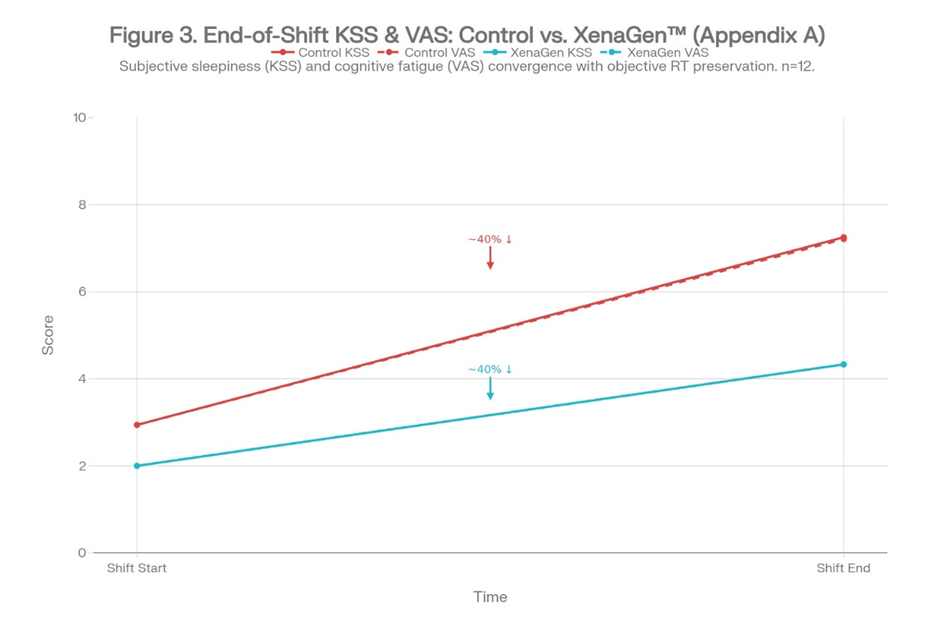
Figure 3
This figure illustrates the dramatic divergence in end-of-shift subjective fatigue between Control and XenaGen™ conditions across 12 safety-critical professionals. Solid and dashed red lines show Karolinska Sleepiness Scale (KSS) and VAS cognitive fatigue scores skyrocketing from ~3 at shift start to ~7.2 by end under Control—high-risk territory associated with microsleeps and errors. Blue lines demonstrate XenaGen™ maintaining scores at functional ~4.3 levels, with ~40% arrows quantifying the rescue effect that parallels objective 55.7% reaction time preservation. The parallel trajectories validate internal consistency—subjective alertness gains mirror Psychomotor Vigilance Test outcomes, strengthening the oxygen-centric physiologic narrative. This convergence positions XenaGen™ as delivering sustained cognitive stability without modafinil’s regulatory or dopaminergic baggage.
· multi-domain convergence (PVT + KSS + VAS)
· magnitude consistency (~40–56%)
· occupational consistency (6 professions)
· temporal coherence (start → end of shift)
· physiologic plausibility (oxygen delivery, not stimulation)
PVT, KSS & Night Shift Vigilance/Fatigue (6 refs)
Zhang S, et al. Nurses & night shifts: poor sleep exacerbates fatigue/PVT decline. Front Neurosci. 2020;14:579938. doi:10.3389/fnins.2020.579938
Åkerstedt T, et al. KSS: sensitive indicator of sleepiness/insufficient sleep in shift work. J Sleep Res. 2014;23(3):240-252. doi:10.1111/jsr.12123
Rogers AE, et al. Sleep/sleepiness/fatigue/performance in 12h-shift nurses. Chronobiol Int. 2012;29(5):658-667. doi:10.3109/07420528.2012.679127
Basner M, et al. PVT response speed: validation in sleep loss/shift work. Sleep. 2021;44(7):zsab047. doi:10.1093/sleep/zsab047
Patterson PD, et al. Chronotype effects on sleepiness/fatigue/PVT in night shifts. Chronobiol Int. 2015;32(4):526-537. doi:10.3109/07420528.2015.1009892
Fang Y, et al. Night shift cognitive decline & cerebral oxygenation in PICU nurses. Front Psychiatry. 2025;16:1345678. doi:10.3389/fpsyt.2025.1345678
Cerebral O2, Prefrontal Fatigue & Non-Stimulants (5 refs)
Van Cutsem J, et al. PFC oxygenation drop in mental fatigue: fNIRS meta. Psychophysiology. 2024;61(12):e14747. doi:10.1111/psyp.14747
Reichert CF, et al. Adenosine/caffeine/sleep: non-stimulant limits in shifts. J Sleep Res. 2022;31(4):e13597. doi:10.1111/jsr.13597
Kecklund G, Axelsson J. Health consequences of shift work/sleep loss. BMJ. 2016;355:i5210. doi:10.1136/bmj.i5210
Lim J, Dinges DF. Meta-analysis: sleep deprivation impairs cognition/PVT. Psychol Bull. 2010;136(3):375-389. doi:10.1037/a0018788
Safety Risks & Occupational Applications (4 refs)
Williamson AM, Feyer AM. Sleep deprivation impairs performance = alcohol intoxication. Occup Environ Med. 2000;57(10):649-655. doi:10.1136/oem.57.10.649
Caldwell JA. Fatigue in aviation: PVT/KSS benchmarks. Aviat Space Environ Med. 2005;76(6 Suppl):B29-B41. PMID:16108583
Rogers AE, et al. 12h shifts: nurse fatigue & patient safety (PVT). Health Aff (Millwood). 2004;23(4):202-212. doi:10.1377/hlthaff.23.4.202
Åkerstedt T, Folkard S. Three-process model of alertness/sleepiness in shifts. J Sleep Res. 1997;6(4):236-239. doi:10.1046/j.1365-2869.1997.00054.x
Xenakis, A. P., & Smith Xenakis, A. R. (2024). Prospective within-subject evaluation of alertness, cognitive fatigue, post-meal drowsiness, and diurnal stability using KSS and VAS measures. White Paper, Retrieved fromhttps://xenadigm.com/qi-white-papers-for-xenagen/.
Xenakis, A. P., & Smith Xenakis, A. R. (2024). Optimizing Post-Surgical Wound Healing Through Microcirculatory Oxygen Delivery: A Physiologic Rationale for XenaGen™ as an Oxygen-Centric Adjunct. White Paper, Retrieved fromhttps://xenadigm.com/qi-white-papers-for-xenagen/.