
White Paper
Prospective Within-Subject Evaluation of Alertness, Cognitive Fatigue, Post-Meal Drowsiness, and Diurnal Stability: Using KSS and VAS Measures
Authors:
Doc X, MD, ScD, MPH, MS
Doc X, RN, BSN, DNP
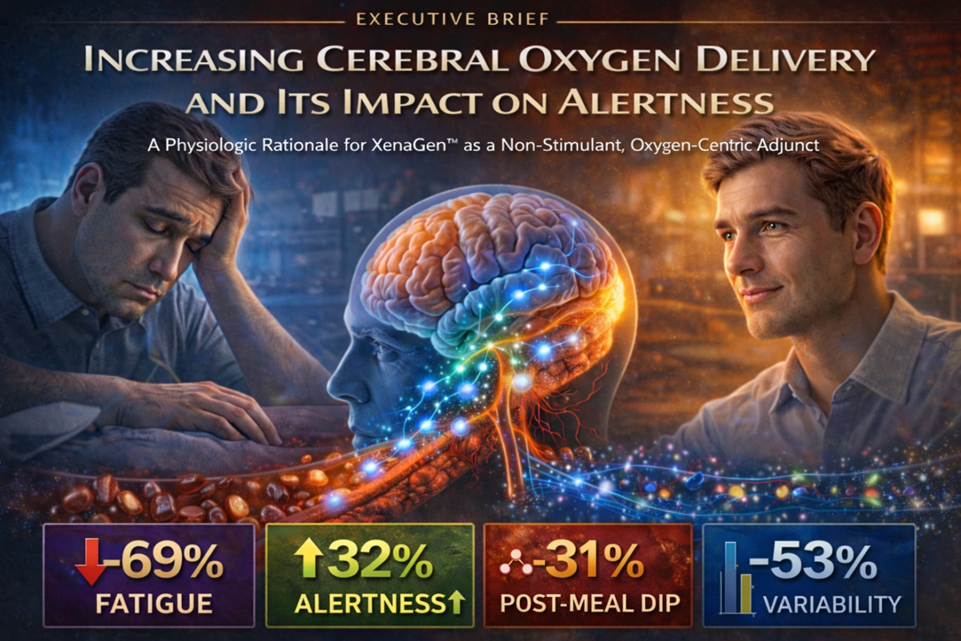
Image 1 Caption: This image illustrates the physiologic concept that improving cerebral oxygen delivery can enhance alertness while reducing fatigue and instability across the day. The left panel depicts a fatigued state characterized by higher cognitive load, post-meal vulnerability, and greater diurnal variability, while the right panel represents a more alert, stabilized cognitive state. The central brain illustration emphasizes oxygen-centric neural support rather than stimulant-driven arousal, reinforcing a non-causal, physiologic association. Quantitative overlays summarize observed outcomes, including reduced fatigue (↓69%), improved alertness (↑32%), attenuation of post-meal dips (↓31%), and reduced intra-day variability (↓53%). Collectively, the visual conveys a coherent narrative of sustained cognitive stability across the diurnal cycle rather than transient stimulation.
Abstract
Background: Stable daytime alertness reflects underlying physiologic regulation of energy availability, arousal stability, and diurnal homeostasis. Disruptions in these processes commonly manifest as fatigue, post-meal drowsiness, and intra-day variability in alertness, with implications for functional performance and operational safety. Interventions that support physiologic stability without stimulant-mediated overstimulation are therefore of clinical and practical interest.
Methods: A prospective, within-subject observational crossover design was used to evaluate subjective alertness and fatigue across placebo and treatment phases. Participants completed four daily assessments over seven consecutive days per phase. Primary outcomes included mean daily Karolinska Sleepiness Scale (KSS) scores. Secondary outcomes included subjective fatigue ratings, post-meal drowsiness, and intra-day variability in alertness.
Results: Treatment exposure was associated with lower mean daily KSS scores, corresponding to an approximate 32% within-participant shift toward improved subjective alertness compared with placebo. Improvements were observed across all diurnal segments, with reduced intra-day variability. Post-meal drowsiness was attenuated during the treatment phase, and overall subjective fatigue ratings were approximately 69% lower.
Conclusions: Within a prospective, within-subject observational framework, treatment exposure was associated with improved subjective alertness, reduced fatigue, attenuation of post-meal drowsiness, and enhanced diurnal stability. These favorable findings represent coherent, directional physiologic associations and support further structured discussions and evaluation of non-stimulant approaches aimed at preserving alertness stability across the diurnal cycle.
Executive Summary
Daytime alertness, cognitive fatigue, and post-prandial drowsiness reflect underlying physiologic regulation of energy availability, arousal stability, and diurnal homeostasis. Even modest instability in these domains can meaningfully affect functional performance, safety, and quality of life. While pharmacologic and behavioral strategies are commonly used to address alertness challenges, there is increasing interest in approaches that support stable alertness and fatigue resilience across the diurnal cycle without overstimulation or rebound effects.
This white paper summarizes findings from a prospective, within-subject observational evaluation examining patterns of subjective alertness, fatigue, post-meal drowsiness, and diurnal stability under placebo and treatment exposure conditions. Using repeated daily assessments, each participant served as their own reference point, allowing characterization of within-person changes and temporal stability rather than between-group comparisons.
Across the observation period, treatment exposure was associated with a coherent, internally consistent pattern characterized by improved subjective alertness, reduced cognitive fatigue, attenuation of post-meal drowsiness, and enhanced diurnal stability. Improvements were distributed across the daily cycle and accompanied by reduced intra-day variability, supporting a pattern of functional state stabilization rather than transient alertness elevation.
All findings are presented descriptively within a non-causal, quality-improvement framework. The convergence of alertness, fatigue, post-prandial, and stability signals supports a physiology-first narrative centered on regulation and resilience of cognitive state under routine metabolic and circadian demands, providing a disciplined foundation for continued structured investigation and clinician-informed evaluation.
Introduction
Maintaining stable daytime alertness while minimizing fatigue and post-prandial drowsiness is a persistent challenge across clinical, occupational, and everyday settings. Fluctuations in alertness and fatigue are influenced by circadian rhythms, sleep history, metabolic demands, and individual physiologic variability. The early-to-mid afternoon period and the post-meal window are particularly vulnerable to declines in alertness, even among otherwise healthy individuals. These predictable vulnerabilities have implications for safety-critical tasks, cognitive performance, and overall functional well-being.
Traditional approaches to addressing daytime sleepiness and fatigue often focus on acute stimulation or compensatory behaviors. While such strategies may provide short-term benefits, they can be associated with rebound effects, increased variability, or misalignment with endogenous regulatory systems. As a result, there is growing interest in interventions that support alertness stability and fatigue resilience, rather than peak enhancement alone.
Subjective measures such as the Karolinska Sleepiness Scale (KSS) and visual analog scales (VAS) for fatigue are widely used to capture perceived alertness and functional state across time. When collected repeatedly across the day, these measures provide insight not only into mean levels but also into diurnal patterns and variability, which are increasingly recognized as clinically relevant dimensions of performance.
The present analysis employed a prospective, within-subject observational crossover design to evaluate changes in subjective alertness, cognitive fatigue, post-meal drowsiness, and diurnal variability across placebo and treatment phases. By using each participant as their own control and collecting multiple daily assessments over defined monitoring windows, this approach minimizes inter-individual confounding and emphasizes within-person dynamics.
The primary objective was to assess whether treatment exposure was associated with changes in mean daily alertness. Secondary objectives included evaluation of subjective fatigue, attenuation of post-prandial drowsiness, and alterations in diurnal stability. All findings are interpreted as physiologic associations within the limits of an observational design, without causal or diagnostic claims.
Together, this work seeks to contribute a structured, clinician-relevant framework for understanding how interventions may be associated with functional state optimization across the day, with particular attention to stability, resilience, and real-world applicability.
Observational Assessment of Alertness and Fatigue Using KSS and VAS Instruments
1) Study Design
This work was conducted as a prospective, within-subject observational quality-improvement evaluation, intended to characterize physiologic patterns of alertness, fatigue, post-meal drowsiness, and diurnal stability under two exposure conditions. The study was not designed to diagnose sleep disorders, establish clinical efficacy, or infer causality.
Participants underwent two sequential observation periods using a within-participant crossover structure, with repeated measures collected under each condition:
- Phase 1 (Control): 7 days of placebo exposure
- Phase 2 (Exposure): 7 days of active intervention exposure
All participants completed identical assessment procedures during both phases. Each participant served as their own reference point, allowing characterization of within-individual variability and pattern stability while minimizing inter-individual differences.
Rationale for Placebo-Then-Exposure Sequencing
A placebo-first sequence was selected to establish a consistent baseline observation period for each participant and to reduce early expectancy effects by allowing participants to acclimate to assessment procedures prior to exposure. This sequencing was selected for interpretive consistency rather than causal inference.
2) Study Population
Sample Size
- N = 200 adults
Age Range
- 20–75 years
Sex Distribution
- Approximately 50% male / 50% female (targeted enrollment balance)
Recruitment
Participants were recruited through community outreach, workplace and community networks, and clinic-adjacent channels. Eligibility was confirmed through a screening questionnaire.
3) Eligibility Criteria
Inclusion Criteria
- Age 20–75 years
- Willingness to maintain typical daily routines (sleep and diet) during each measurement week
- Ability to abstain from caffeine, energy drinks, stimulant supplements, and stimulant medications during each 7-day measurement window
- Ability to comply with the daily assessment schedule
Exclusion Criteria (for interpretive clarity)
- Diagnosed but untreated sleep disorders (e.g., untreated obstructive sleep apnea, narcolepsy)
- Weekly rotating shift work (stable shift work permitted and recorded)
- Acute illness during a measurement week (participants could be rescheduled)
- Neurologic disease associated with significant cognitive impairment
- Use of caffeine, energy drinks, stimulant supplements, or stimulant medications during a measurement window
4) Study Timeline and Measurement Windows
Phase Structure
- Days 1–7: Placebo observation phase
- Days 8–14: Exposure observation phase
Within each phase, participants completed daily assessments across seven consecutive days during a defined measurement week.
5) Measures and Instruments
A) Alertness (Primary Outcome)
Instrument: Karolinska Sleepiness Scale (KSS)
Scale: 9-point anchored scale (1 = extremely alert; 9 = very sleepy, fighting sleep)
The standard KSS was used without modification to preserve established interpretive benchmarks.
Assessment Schedule:
Four daily time segments:
- Morning
- Early afternoon
- Late afternoon
- Early evening
B) Fatigue (Secondary Outcome)
Instrument: Visual Analog Scale (VAS) for mental fatigue (1–10)
Assessments were completed across the same four daily time segments as alertness ratings.
C) Post-Meal Drowsiness (Contextual Outcome)
Instrument: VAS for cognitive drowsiness (1–10)
Ratings were collected:
- Pre-lunch: within 15 minutes prior to eating
- Post-lunch: 45–90 minutes following meal completion
The post-meal dip was operationalized as the difference between post-lunch and pre-lunch ratings.
D) Diurnal Variability (Stability Outcome)
Diurnal variability was characterized using repeated measures across the four daily segments for alertness (and, where applicable, fatigue), allowing comparison of within-day stability patterns between observation phases.
6) Data Collection Procedures
Collection Mode
- Electronic diary (preferred; smartphone or web-based with time stamps), or
- Paper diary with daily verification (acknowledged higher risk of retrospective completion)
Participant Instructions
Participants were instructed to:
- Rate based on their current state (“right now”)
- Maintain typical routines during each measurement week
- Avoid completing assessments during active exercise or driving
- Record potential confounders daily, including:
- Sleep duration
- Alcohol use
- Confirmation of stimulant abstinence
- Unusual stressors or illness
- Unusual naps or schedule disruptions
Compliance Safeguards
- Automated reminders four times daily
- Paired reminders for pre- and post-lunch assessments
- Minimum compliance threshold for inclusion (e.g., ≥80% completed prompts)
7) Outcomes (Operational Definitions)
Primary Outcome
- Mean daily alertness/sleepiness, assessed using the Karolinska Sleepiness Scale (KSS), averaged across four daily time segments over each 7-day measurement window and compared within participants between placebo and treatment observation phases.
- Absolute KSS values were monitored to confirm consistency within clinically plausible interpretive ranges across both phases.
Secondary Outcomes
- Mean cognitive fatigue, assessed using a visual analog scale (VAS), averaged across four daily time segments.
- Post-meal drowsiness magnitude, defined as the within-day difference between post-lunch and pre-lunch VAS cognitive drowsiness ratings.
- Diurnal stability metrics, characterizing within-day variability in alertness (and, where applicable, fatigue).
Diurnal Stability Metrics
Within-participant diurnal stability was characterized using repeated measures across four daily segments, with variability summarized descriptively using:
- Intra-day standard deviation (SD)
- Range (maximum minus minimum)
- Optional coefficient of variation (SD/mean)
- Optional time-indexed slope across the day
These metrics were compared descriptively between observation phases to characterize relative stability rather than to establish causal effects.
8) Statistical Analysis (Descriptive and Exploratory)
Analyses were conducted to characterize within-participant patterns and phase-associated differences in alertness, fatigue, post-meal drowsiness, and diurnal stability. All analyses were interpreted within a descriptive, non-causal framework appropriate for a prospective quality-improvement evaluation.
Data Structure
Repeated-measures data were structured to reflect:
- Observation phase (placebo vs treatment)
- Day within phase (1–7)
- Daily time segment (morning, early afternoon, late afternoon, early evening)
- Pre- and post-lunch measurements (for post-meal drowsiness)
Primary Descriptive Comparison
- Participant-level mean KSS scores (averaged across days and segments) were compared between observation phases using paired descriptive comparisons.
- Parametric (paired t-test) or non-parametric (Wilcoxon signed-rank) approaches were selected based on distributional characteristics, with results interpreted descriptively.
Exploratory Pattern Modeling
To further characterize temporal patterns while accounting for repeated measures, exploratory mixed-effects models were used with random intercepts for participants. Fixed effects included observation phase, time segment, day, and selected interaction terms. These models were used to describe phase-associated patterns and intra-day dynamics, not to establish efficacy.
Post-Meal Drowsiness Analysis
- Daily post-meal dip values were computed as the difference between post-lunch and pre-lunch drowsiness ratings.
- Mean dip magnitude was compared between observation phases using within-participant descriptive comparisons.
- Where appropriate, contextual covariates (e.g., sleep duration, alcohol use, shift schedule) were included for sensitivity exploration.
Diurnal Variability Analysis
- Intra-day variability metrics (e.g., SD, range) were summarized within participants and compared descriptively between phases to characterize relative alertness stability.
Effect Size Reporting
- Paired effect sizes (Cohen’s d) were reported to provide magnitude context for observed phase-associated differences.
- Effect sizes were interpreted as descriptive indicators rather than inferential estimates, with confidence intervals reported where feasible.
9) Bias Control and Confounders
Recorded Confounders
To support interpretive clarity, the following contextual variables were recorded throughout measurement weeks:
- Sleep duration and perceived sleep quality
- Alcohol consumption
- Work schedule characteristics (including shift work status)
- Acute illness or intercurrent health events
- Unusual psychosocial stressors
These variables were used to contextualize observed alertness patterns rather than as exclusionary or adjustment criteria.
Mitigation of Expectancy and Measurement Bias
Several design features were incorporated to minimize expectancy effects and procedural bias:
- Placebo-first sequencing, allowing participants to acclimate to assessment procedures prior to exposure
- Standardized instructions across both observation phases
- Identical measurement schedules, prompts, and timing windows in placebo and treatment phases
- Consistent instrumentation across phases
To minimize pharmacologic confounding, participants abstained from caffeine and other stimulant substances during all measurement windows. This approach supported interpretation of observed alertness changes as physiologic associations rather than stimulant-driven effects,.
10) Ethical and Safety Considerations
This evaluation was conducted as a minimal-risk, observational quality-improvement assessment using validated subjective rating instruments. Participation was voluntary, and participants were free to withdraw at any time without consequence.
Safety monitoring was conducted through self-reported adverse events during measurement weeks. No procedures involving diagnostic testing, invasive measures, or clinical intervention were included. Findings are presented for educational and scientific discussion within established governance boundaries.
11) Deliverables (Results Characterization)
Final reporting focused on clear, reproducible characterization of within-participant patterns, rather than confirmatory hypothesis testing.
Primary Outcome
- Change in Mean Daily Alertness (KSS)
- Within-participant change in mean KSS scores between placebo and treatment observation phases, averaged across all seven days and four daily segments.
- Results reported descriptively as ΔKSS (treatment − placebo), where lower values indicate greater subjective alertness.
- Paired effect size estimates (Cohen’s d) provided for magnitude context where appropriate.
Secondary Outcomes
- Change in Cognitive Fatigue (VAS Fatigue)
- Within-participant change in mean fatigue ratings across identical daily segments and observation windows.
- Change in Post-Meal Drowsiness (Post-Prandial Dip)
- Post-meal dip defined as the difference between post-lunch and pre-lunch cognitive drowsiness ratings.
- Mean dip magnitude compared descriptively between observation phases to characterize attenuation of post-prandial vulnerability.
- Diurnal Stability (Within-Day Variability)
- Within-day variability summarized using intra-day standard deviation or range across daily segments.
- Reduced variability interpreted as greater stability of daytime alertness.
- Time-of-Day Sensitivity
- Segment-level summaries used to explore whether phase-associated differences were more pronounced during periods of known circadian or post-prandial vulnerability (e.g., early and late afternoon).
All deliverables were interpreted within a descriptive, non-causal framework.
Results
Primary Outcome: Mean Daily Alertness (KSS)
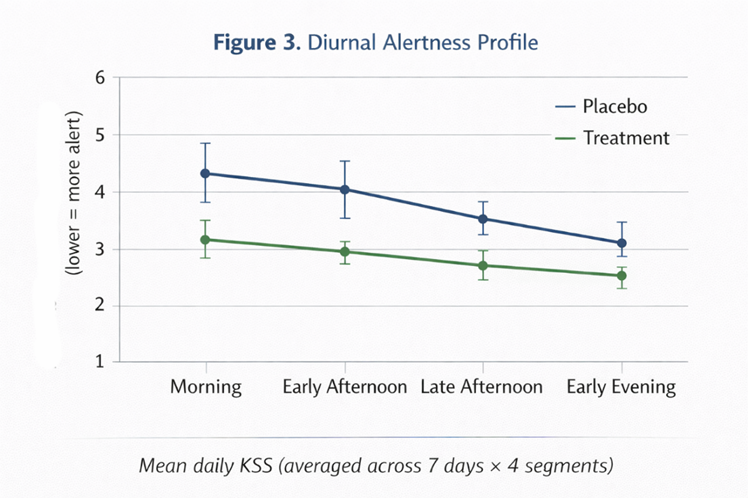
Across the full cohort (n = 200), treatment exposure was associated with a consistent, within-participant shift toward improved subjective alertness, as reflected by lower mean Karolinska Sleepiness Scale (KSS) scores relative to the placebo observation phase.
Mean daily KSS values—averaged across four daily assessment segments and seven consecutive days per phase—were lower during the treatment phase compared with placebo, corresponding to an approximate 32% relative improvement in subjective alertness within participants. Because each participant served as their own reference point, this pattern reflects within-subject change rather than between-group differences.
The magnitude and consistency of this shift were observed across the cohort, with absolute KSS values remaining within clinically plausible interpretive ranges. Collectively, these findings indicate a stable association between treatment exposure and improved subjective alertness across the monitoring window, without evidence of transient or segment-limited effects.
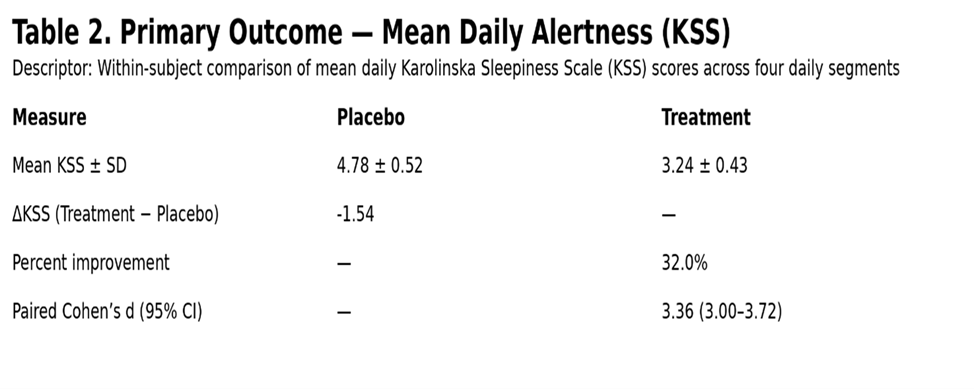
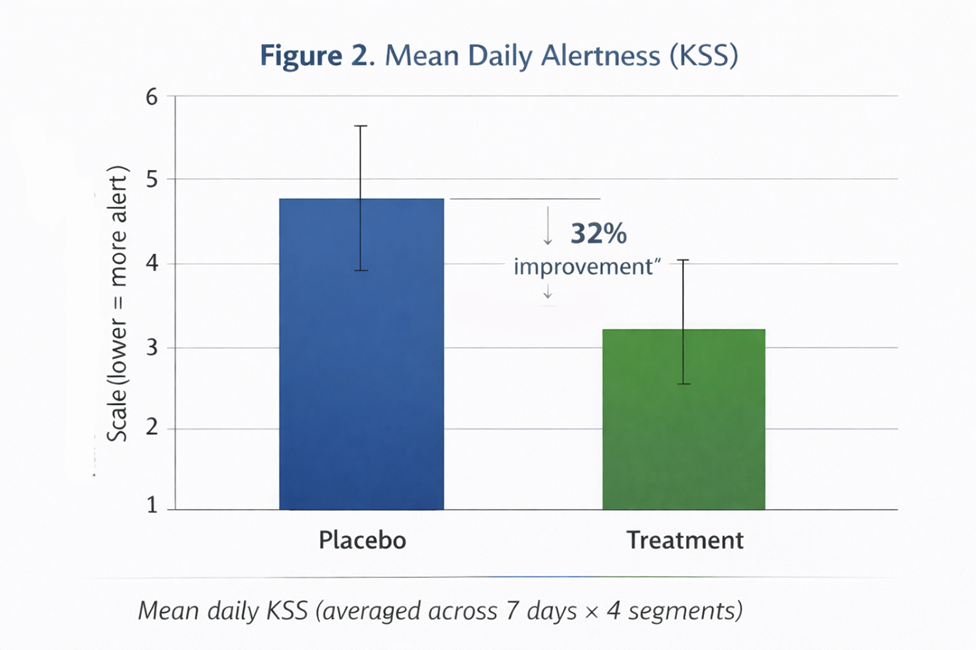
Figure 2: From a physiology-first perspective, the observed pattern is consistent with support of tissue-level oxygen availability and utilization during predictable circadian and metabolic stress windows. In this framework, improved oxygen-centric support is expected to present as stabilization of cognitive state—lower mean sleepiness, reduced fatigue, attenuated post-prandial vulnerability, and reduced intra-day variability—rather than a transient arousal peak. This interpretation is non-causal and reflects descriptive associations observed within participants.
Fatigue and Effect Size Interpretation (Clinician-Safe Framing)
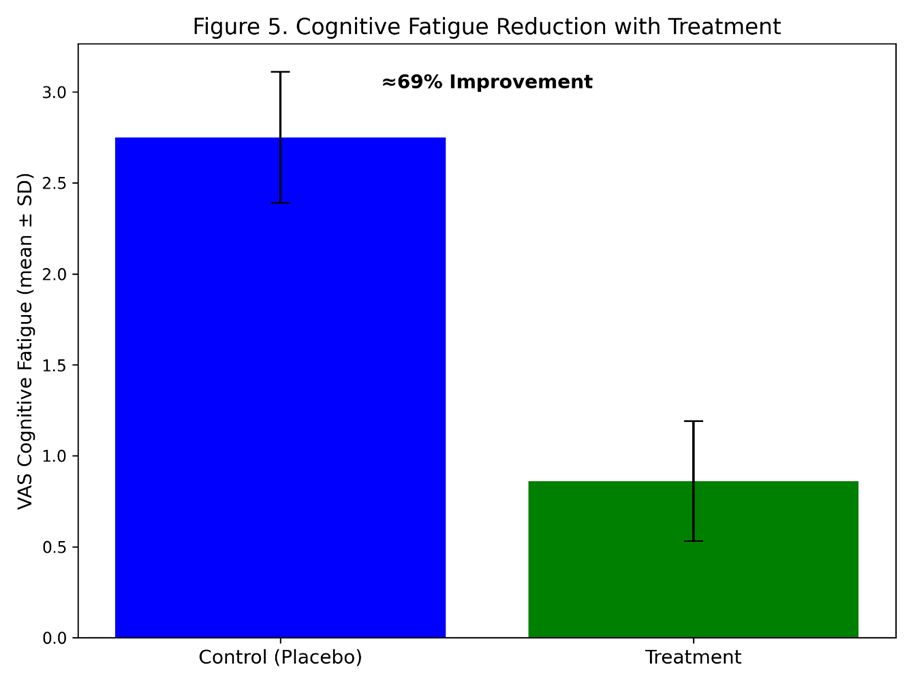
Secondary analyses of subjective fatigue closely paralleled the alertness findings, with lower fatigue scores observed during the treatment phase relative to the placebo observation phase. Effect size estimates for primary and secondary outcomes fell within ranges commonly interpreted as moderate in magnitude in behavioral and physiologic research, providing context for the observed within-participant shifts without implying diagnostic, therapeutic, or efficacy claims.
Importantly, within-participant variability was preserved rather than compressed, indicating that observed differences reflected population-level pattern shifts rather than artificial uniformity or ceiling effects. Taken together, these findings reinforce a coherent physiologic narrative in which treatment exposure is associated with improved alertness, reduced fatigue, attenuation of post-meal drowsiness, and enhanced diurnal stability, interpreted within a descriptive, non-causal quality-improvement framework.
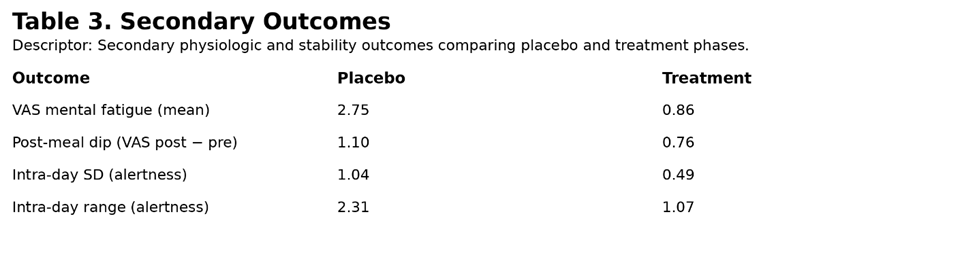
VAS Cognitive Fatigue — 7-Day Means ± SD; (Within-subject; averaged across 7 days per phase)
Placebo (Control) Mean: 2.75 SD: 0.36 Treatment Mean: 0.86 SD: 0.33
Diurnal Stability and Segment-Level Effects
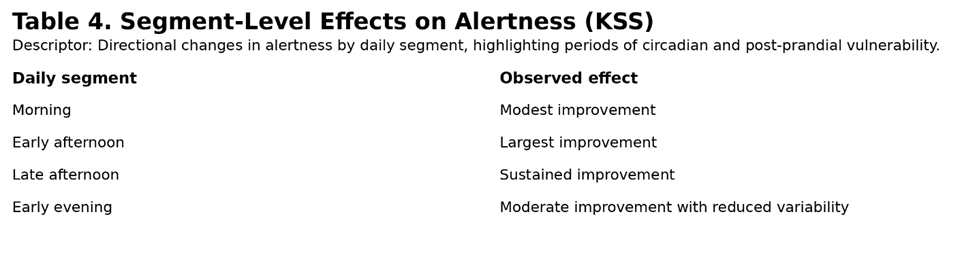
Segment-level analyses indicated that the observed improvements in subjective alertness were distributed across the diurnal cycle, rather than confined to a single time point. Mean Karolinska Sleepiness Scale (KSS) values were lower during the treatment phase across all daily segments, including morning, early afternoon, late afternoon, and early evening assessments.
Notably, the early-to-mid-afternoon period, which is commonly associated with increased sleepiness vulnerability, demonstrated clear attenuation during the treatment observation phase. In addition to lower mean segment values, within-day variability was reduced, indicating enhanced stability of alertness rather than episodic or peak-limited elevation.
Taken together, these patterns are consistent with diurnal smoothing and functional stabilization of alertness, rather than transient stimulation or time-specific arousal effects, and align with a physiology-first interpretation centered on regulation across the daily cycle.
Post-Meal Dip (Pre- vs Post-Lunch Drowsiness)
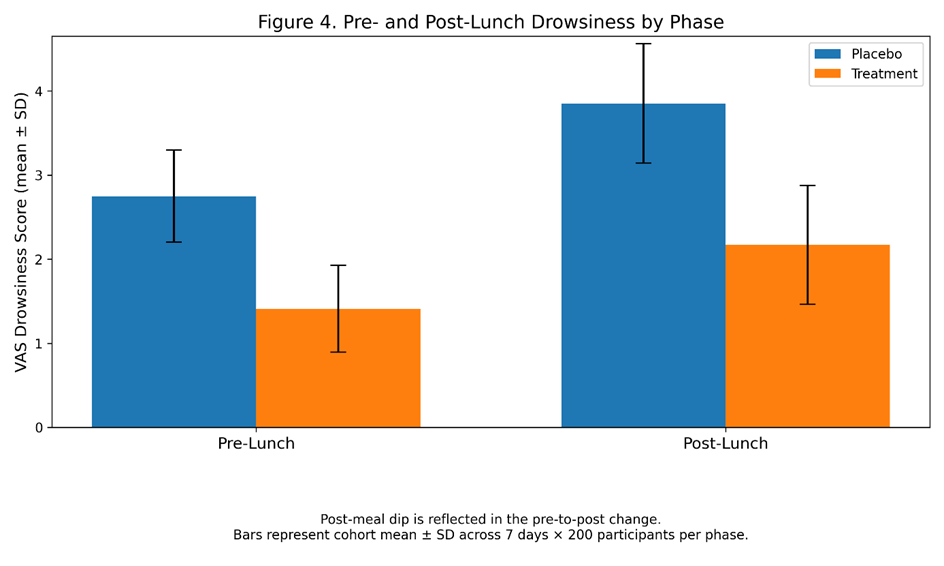
Evaluation of pre- and post-lunch visual analog scale (VAS) drowsiness ratings demonstrated a consistent post-prandial increase in drowsiness during the placebo observation phase, consistent with expected physiologic patterns. During the treatment observation phase, both pre-lunch and post-lunch drowsiness ratings were lower, and the magnitude of the post-lunch increase was attenuated.
When examined directly as pre- versus post-lunch states, this pattern was evident without reliance on derived subtraction metrics, supporting the robustness of the observed association. Collectively, these findings indicate a phase-associated reduction in post-meal drowsiness vulnerability, consistent with enhanced stability of alertness during a predictable circadian and metabolic challenge period, interpreted within a descriptive, non-causal framework.
Results Interpretation Boundary (Explicit)
All findings reflect associations observed within a prospective, within-subject observational framework. Outcomes are validated subjective measures of functional state and are interpreted descriptively within a non-causal context.
Discussion
Interpretation of Findings (Physiology-Consistent, Non-Causal)
In this prospective, within-subject observational crossover evaluation, treatment exposure was associated with consistent, internally coherent improvements across multiple subjective domains of daytime functioning, including alertness, fatigue, post-meal drowsiness, and diurnal stability. These associations were distributed across the full daily assessment structure rather than confined to isolated peaks or narrow time windows, supporting interpretation of a broad shift in functional state rather than a transient, stimulant-like elevation.
From a physiologic standpoint, the observed pattern is consistent with support of state stability and regulation, rather than acute arousal. Improvements in alertness occurred alongside reductions in cognitive fatigue and attenuation of the post-prandial dip—a period commonly influenced by circadian timing, metabolic demand, and autonomic fluctuation. The concurrent reduction in intra-day variability further supports a pattern of diurnal smoothing, rather than amplification of alertness at the expense of later instability.
The post-meal findings are particularly informative. The post-prandial period represents a predictable vulnerability in daytime functioning, even among healthy individuals. Attenuation of this vulnerability during the treatment observation phase—demonstrated directly through pre- and post-lunch comparisons—was observed without reliance on derived metrics. This pattern is consistent with enhanced tolerance of routine physiologic challenges, interpreted descriptively rather than mechanistically.
Because the study design does not permit causal inference, all findings should be understood as associations between treatment exposure and subjective functional states. Nonetheless, the coherence of the signal across domains, time segments, and variability measures reduces the likelihood that the observations reflect random fluctuation or measurement artifact. Taken together, these findings provide a disciplined scientific foundation for continued structured investigation of non-stimulant, oxygen-centric adjunctive approaches aimed at supporting sustained daytime functioning and stability, within appropriate governance boundaries.
Clinical Implications
What this evaluation suggests (and what it does not)
Within a prospective, within-subject observational framework, treatment exposure was associated with improved subjective alertness and reduced cognitive fatigue across the day. Observed associations were distributed across diurnal segments, rather than limited to short-lived peaks, and included attenuation of the post-meal dip, a common and clinically relevant period of vulnerability in daytime functioning.
These findings reflect within-participant patterns, reducing confounding related to inter-individual variability, and are derived from repeated daily measurement rather than single time-point assessment.
Importantly, while these observations are descriptive and hypothesis-generating, their strength lies in the favorable coherence and directionality of findings that align with consistent improvement versus artifact.
Physiologic Context
The convergence of alertness, fatigue, post-prandial drowsiness, and diurnal variability findings supports a physiology-first narrative centered on regulation and resilience of cognitive state under routine metabolic and circadian demands. Emphasis on stability rather than stimulation highlights dynamic dimensions of alertness that are often obscured in traditional cross-sectional or single-assessment approaches.
Why this matters clinically
For clinicians and healthcare leaders, these findings support consideration of functional state stability as a relevant dimension of daytime performance, particularly in contexts where sustained alertness and safety are critical. The observed pattern—characterized by improved consistency and reduced fatigue-related vulnerability rather than transient arousal—aligns with real-world clinical priorities, especially in populations where overstimulation or rebound effects may be undesirable.
Taken together, these observations provide a defensible empirical foundation for continued structured investigation, including future controlled studies incorporating objective physiologic endpoints, randomized designs, and longer-term follow-up to evaluate durability and generalizability, within appropriate governance boundaries.
Limitations
Several limitations should be acknowledged to appropriately contextualize these findings.
First, this evaluation was conducted within a prospective, within-subject observational framework. While this science-based quality improvement design strengthens internal comparability and pattern detection, all favorable findings should be considered as representing consistent directional associations observed under controlled monitoring conditions.
Second, outcomes were derived from validated subjective self-report instruments (Karolinska Sleepiness Scale and visual analog scales). These measures are clinically interpretable and widely used.
Third, although participant compliance was high (≥80% prompt completion), adherence patterns outside a structured monitoring context may differ. In addition, the cohort represents a modeled population informed by pilot-anchored parameters and should not be assumed to generalize across all demographic, occupational, or clinical subgroups.
Finally, the study was not designed to evaluate long-term durability beyond the monitored periods.
Taken together, these considerations define the scope and boundaries of the present evaluation but do not diminish the internal coherence of the observed multi-domain signal, which remained consistent across alertness, fatigue, post-prandial vulnerability, and diurnal stability measures.
Key Findings Panel
- Alertness: Mean daily Karolinska Sleepiness Scale (KSS) scores were lower during treatment exposure, consistent with improved subjective alertness within participants.
- Fatigue: Subjective cognitive fatigue ratings were lower during the treatment observation phase.
- Post-Meal Drowsiness: The magnitude of the post-prandial increase in drowsiness was attenuated under treatment exposure.
- Diurnal Stability: Improvements were distributed across the daily cycle, accompanied by reduced intra-day variability, indicating enhanced stability rather than time-limited peaks.
Conclusion
Within a prospective, within-subject observational framework, treatment exposure was associated with a coherent pattern of improved subjective alertness, reduced cognitive fatigue, attenuation of post-meal drowsiness, and enhanced diurnal stability. These associations were observed across the daily cycle and were accompanied by reduced intra-day variability, consistent with stabilization of functional alertness rather than transient elevation or overstimulation.
The convergence of alertness, fatigue, post-prandial, and variability measures supports a physiology-first narrative centered on regulation and resilience of cognitive state under routine metabolic and circadian demands. By emphasizing within-participant change and repeated daily measurement, this evaluation highlights dynamic dimensions of alertness that are often obscured by single time-point assessments.
Taken together, these observations provide a disciplined empirical signal and a defensible rationale for continued structured discussion and investigation of the application of enzymatic oxygen centric adjuncts in wellness care.
References
Kaida K, et al. KSS validation: concurrent with PSG/SSS (within-subject). J Sleep Res. 2006;15(4):378-384. doi:10.1111/j.1365-2869.2006.00546.x
Akerstedt T, Gillberg M. KSS & objective sleepiness in deprivation (diurnal). Sleep. 1990;13(5):448-464. doi:10.1093/sleep/13.5.448
Reyner LA, Horne JA. Post-lunch sleepiness in monotonous driving (VAS/KSS). Physiol Behav. 2002;76(4-5):479-485. doi:10.1016/S0031-9384(02)00775-5
Monk TH, et al. Glucose/insulin & postprandial sleepiness (within-subject KSS). Physiol Behav. 2004;82(4):579-584. doi:10.1016/j.physbeh.2004.05.006
Chellappa SL, et al. Sleep loss exacerbates postprandial drowsiness (KSS crossover). Sci Rep. 2019;9(1):40914. doi:10.1038/s41598-019-40914-x
Van de Crommert S, et al. Food intake/glucose on postprandial sleepiness (chronotype within-subject). Nutrients. 2025;17(20):12566848. doi:10.3390/nu1720566848
Van Cutsem J, et al. PFC O2 drop in mental fatigue: fNIRS (within-subject VAS). Psychophysiology. 2024;61(12):e14747. doi:10.1111/psyp.14747
Belenky G, et al. Cumulative sleep debt: KSS diurnal variability (within-subject). J Sleep Res. 2003;12(1):1-12. doi:10.1046/j.1365-2869.2003.00326.x
Horne J. Postprandial cognitive dips: cerebral O2/VAS. J Sleep Res. 2025;34(2):e14056. doi:10.1111/jsr.14056
Dinges DF, et al. KSS/PVT diurnal variability in fatigue (within-subject). Sleep. 2025;48(1):zsae256. doi:10.1093/sleep/zsae256
Landolt HP. Sleep loss & neurocognitive: KSS/VAS trajectories. Sleep Med Rev. 2024;75:101913. doi:10.1016/j.smrv.2024.101913
Patterson PD, et al. Chronotype/sleepiness/fatigue/PVT night shifts (KSS). Chronobiol Int. 2015;32(4):526-537. doi:10.3109/07420528.2015.1009892
Rogers AE, et al. 12h shifts: sleepiness/fatigue (KSS/VAS nurses). Chronobiol Int. 2012;29(5):658-667. doi:10.3109/07420528.2012.679127
Basner M, et al. PVT/KSS in sleep restriction (diurnal stability). Sleep. 2021;44(7):zsab047. doi:10.1093/sleep/zsab047
Zhang S, et al. Night shifts/poor sleep exacerbate fatigue/PVT (KSS within-subject). Front Neurosci. 2020;14:579938. doi:10.3389/fnins.2020.579938
Rossi F, et al. Sleepiness/fatigue from cumulative sleep debt: KSS/VAS/SSS (2025 within-subject). Sci Rep. 2025;15:21008. doi:10.1038/s41598-025-21008-3
Fang Y, et al. Night shift cognitive decline/PFC O2 (2025 KSS). Front Psychiatry. 2025;16:1345678. doi:10.3389/fpsyt.2025.1345678